It is half past ten in the evening, and a couple in Chicago is planning three nights in Lucerne. They have two tabs open: a booking platform and your hotel’s own website. The platform loads instantly, shows the price and offers free cancellation. Your website starts with a slideshow of the lake, then a small button, then a booking engine that looks nothing like the rest of the site. They close your tab. You will probably still get the booking, through the platform, minus the commission. Multiply that by a season and it becomes clear why the website matters so much in Lucerne. Meanwhile, hundreds of local businesses in central Switzerland compete for something else entirely: the customer down the road. This guide covers both.
A strong Lucerne website is built for its main audience. Tourism businesses need fast, multilingual pages, clear prices and a direct booking path that is easier than the platforms. Local businesses need strong local signals, clear services and proof of experience.
For most Lucerne SMEs, eight to twelve pages per language are enough. Hotels and tour operators often need more languages than local businesses, but not every language at full depth.
Two markets in one city
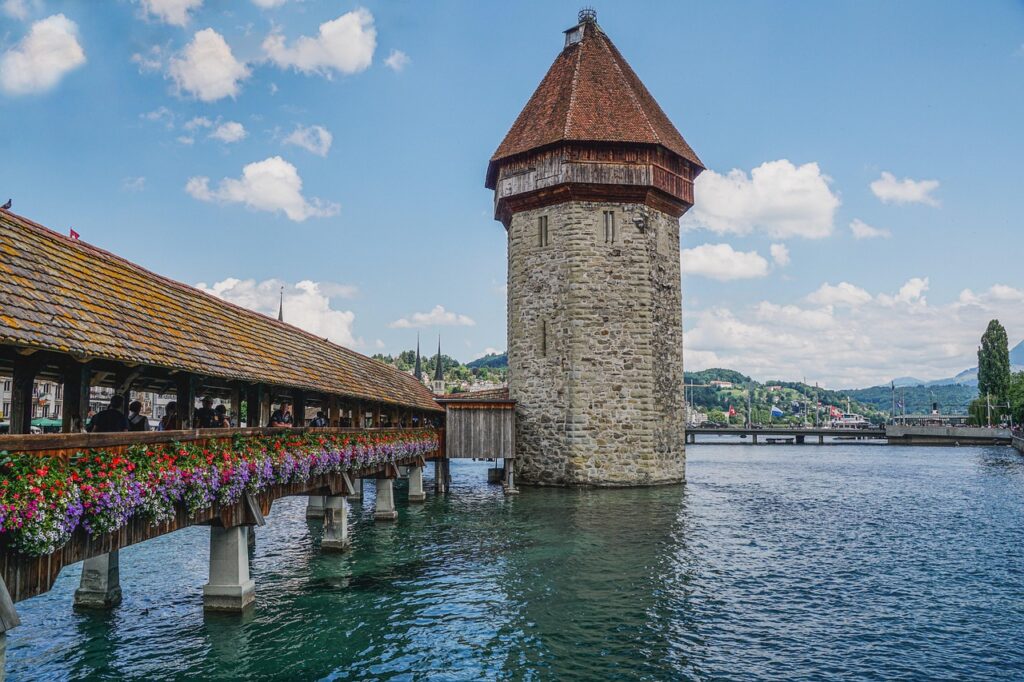
Few Swiss cities are as international in everyday life as Lucerne. The Chapel Bridge, the lake, the KKL and events such as the Lucerne Festival bring visitors from around the world, and many hotels, restaurants, shops and tour operators depend on them. At the same time, Lucerne is the economic centre of central Switzerland, with a large base of local businesses serving the city, the surrounding communities and the neighbouring cantons.
These two markets search differently. A visitor plans weeks in advance, often on a phone, in English or their own language, and compares you with booking platforms. A local customer searches when they need something, usually with “Luzern” or a nearby town in the search, and decides quickly based on location, reviews and clarity. Your website has to serve the market you depend on most, without ignoring the other.
Hotels and holiday rentals: winning the direct booking
Booking platforms bring visibility, but every booking through them costs commission. Many Lucerne hotels and apartment owners would like more direct bookings. The website is where that happens, or does not.
Guests book directly when three things are true: they find your own website easily, it gives them the same or a better offer than the platform, and booking is just as easy. Most hotel websites fail on the third point. The booking engine is hidden behind a small button, rates are not visible without several clicks, or the booking process looks different and less trustworthy than the rest of the site.
| What guests compare | What your website should show |
|---|---|
| Price | Your best available rate, clearly, plus a direct-booking benefit such as breakfast, late check-out or flexible cancellation |
| Availability | A booking engine that shows dates and rates on the first click, on mobile too |
| Trust | Real photos of rooms and views, honest descriptions, reviews and a clear cancellation policy |
| Location | Distance to the station, the old town and the lake, with a map |
| Contact | Phone and email for questions, answered quickly, in the guest’s language |
Direct-booking benefits must be real and consistent. A benefit that disappears at check-in costs you a review.
Our tourism website guide goes deeper into booking engines, rate presentation and guest communication.

Think like a guest at ten in the evening
A guest’s decision does not happen on one page. It moves through moments: inspiration, comparison, reassurance, booking and, later, arrival. Each moment needs a different answer from your website.
Inspiration happens on seasonal pages and in photos that show what a stay with you feels like. Comparison happens the moment the guest sees your price next to the platform’s, so your best rate and your direct benefit must be visible at that moment, not three clicks later. Reassurance comes from the cancellation policy, reviews and a clear description of the location. Booking needs one click from every page, on a phone. And after booking, the confirmation email and an arrival page decide whether the guest arrives relaxed or confused.
Walk through these moments yourself on your phone, ideally in the evening and on mobile data. Wherever you hesitate, a guest leaves.
How much commission could you keep?
Enter your own figures to see what platform commission costs you per year, and how much stays in your business if part of those bookings come directly.
Commission you pay per year: CHF 0. Moving that share to direct bookings keeps CHF 0 a year in your business.
Enter the figures from your own booking statistics and platform contract. The result does not include the cost of payment fees or of marketing your own channel.
Even a modest shift often pays for a professional website many times over. The point is not to leave the platforms, which remain useful for reach, but to make sure that guests who already know you book with you directly.
Direct-booking benefits that actually work
Since December 2022, Swiss law no longer allows online booking platforms to stop hotels from offering lower prices on their own websites (Article 8a of the Federal Act against Unfair Competition). Many contracts were written before that change, so it is worth checking yours with your association or a lawyer.
Price is only one lever, though. Benefits that cost you little but matter to guests often work better: early check-in or late check-out when available, a parking space reserved for direct guests, free cancellation until shortly before arrival, a local tip sheet written by your team, a welcome drink. Name the benefit clearly next to the booking button and keep it consistent. A benefit that is promised online and forgotten at reception costs you more than it brings.
Restaurants, tours and attractions
For restaurants, cafés, tour operators and attractions, the website is often checked in the minutes before a decision. Guests want the menu or offer, opening hours, location, prices and a way to reserve or book. They want it on a phone, quickly, and in a language they understand.
Keep menus as web pages rather than only as PDF files, so they load fast and can be translated and found in search. Show seasonal offers and opening hours clearly, especially outside the main season. For tours and activities, a clear description of what is included, the meeting point and the cancellation policy prevents most questions before they are asked.
Arrival information deserves its own section. Many visitors arrive by train and walk, others come by car and need to know where to park in a city centre with limited space. Explain the walk from the station in plain steps, name the nearest car park, and say whether your entrance is easy to find. These details seem small, but they are exactly what guests search for the evening before they arrive, and a website that answers them earns trust and fewer phone calls.
Languages for guests and for locals
Local businesses in Lucerne usually do well with German and English. Tourism businesses need to think about their guests: English is the common language for international visitors, and businesses with many guests from specific countries may add key pages in those languages.
Be selective. A complete English version plus a few well-translated key pages in other languages is more useful than ten half-maintained versions. Each language needs its own pages and addresses so search engines can show the right version, and translations should be checked by a native speaker. Machine-translated room descriptions full of errors make guests wonder what else is not quite right. Our multilingual SEO guide explains the setup.
Local businesses: winning the “near me” moment
For local customers, the decisive moment is usually a phone search with an urgent need: a plumber today, a physiotherapy appointment this week, a tax adviser before the deadline. They see the map results first, then two or three websites. What wins in that moment is simple: a phone number that can be tapped, current opening hours including holidays, a clear list of services, recent reviews and a sign that you serve their area. Websites that make customers search for any of these lose the call to a competitor who did not.
Local businesses in central Switzerland
Most Lucerne businesses do not depend on tourists at all. Trades, practices, consultants, retailers and service providers in Lucerne, Kriens, Emmen, Horw, Ebikon and the wider region compete for local customers. For them, local search matters most.
Complete your Google Business Profile with the right category, opening hours, photos and service area. Keep your name, address and phone number identical on your website and in directories such as local.ch and search.ch. Create a page for each important service, and mention the towns you serve naturally in your text. Many businesses in central Switzerland also serve neighbouring cantons; say so clearly. The full approach is in our local SEO guide.
Seasons and content: give people a reason to return
Lucerne’s business year has a rhythm: summer on the lake, autumn events, the Christmas market, Fasnacht, winter excursions to the mountains. Websites that reflect this rhythm stay relevant and give search engines fresh, useful content.
For tourism businesses, seasonal pages such as “Lucerne in winter” or “Lucerne with children” answer questions guests actually search for and lead them to your offer. For local businesses, regular articles on common customer questions build trust and visibility over time. If writing every week is unrealistic, our Growth plan includes eight blog posts a month in two languages, researched and written with AI in a natural, human voice and published for you.

Mobile speed: the most underrated factor
Guests plan on their phones, often on hotel or train wifi, and local customers search on the go. A heavy website with large images, sliders and many scripts loses them before the first picture appears. Fast websites rank better and convert better.
Use compressed images in modern formats, avoid autoplay videos and heavy sliders, keep the number of plugins and tracking scripts low, and test your most important pages on a real phone outside the office. Speed is not a technical detail; for a tourism business it is part of the guest experience. A useful habit: open your homepage on your own phone once a month, on mobile data, and time how long it takes until you could book.
Page plans: a lakeside hotel versus a local service business
The right structure depends on who you serve. These two plans show how differently a tourism business and a local business in Lucerne should organise their websites.
| Page | Small hotel or holiday rental | Local service business |
|---|---|---|
| Home | Location, view, best rate, booking button | Main services, service area, contact button |
| Core pages | Rooms or apartments, each with photos, size, rates | One page per service with process and prices |
| Location | Map, distances, arrival by train and car, parking | Towns and areas you serve, travel costs if any |
| Trust | Reviews, house rules, cancellation policy | References, team, qualifications, reviews |
| Inspiration | Seasonal pages and tips for Lucerne | Guides answering common customer questions |
| Contact | Booking engine, phone, email, reply time | Phone, short form, opening hours |
Both plans fit comfortably within eight to twelve pages per language.
Reviews: the quiet sales team
For hotels, restaurants and tours, reviews often weigh more than any text on the website. For local businesses, they decide who gets the call. Ask satisfied guests and customers for a review at the right moment, for example in the thank-you email after check-out or after a completed job, and make it easy with a direct link.
Answer reviews, including critical ones, calmly and specifically. A good reply thanks the guest, addresses the point raised and explains what you changed if something went wrong. Future guests read your replies as carefully as the reviews themselves. Never offer discounts or gifts in exchange for positive reviews; platforms prohibit it, and it undermines the trust you are trying to build.
Photos: show the real place
Guests booking a room want to see that room, not a generic hotel image. Local customers want to see the people who will come to their home or office. Invest in a few honest, well-lit photos of your rooms, views, team and work. They outperform stock photos in trust and in clicks, and they keep working on your website, your Google profile and social media for years.
Is your Lucerne website ready? A quick check
Tick what is already true for your website today.
Tick what’s already true today. The check shows your most important next step.
What a website costs in Lucerne
Bilingual website, total after 3 years
10 pages per language, CHF, excl. VAT
Agency CHF 9,600 × 1.65 for the second language, then CHF 3,120 a year. Freelancer CHF 5,000 × 1.65, then CHF 1,920 a year. Subscription CHF 69 a month billed annually (CHF 828 a year) plus six change requests a year at CHF 50. Booking engines and additional languages are quoted separately.
Our subscription costs CHF 49 a month for one language or CHF 69 for two, billed annually, with Swiss hosting, updates and a yearly design refresh included. Hotels and tour operators with booking engines and several languages get an individual offer. Details on our web design prices page.
Five mistakes we see on Lucerne websites
- A hidden booking button. If guests have to search for the booking engine, they go back to the platform.
- Menus and price lists only as PDF. Slow on phones, invisible to search engines and hard to translate.
- Outdated seasonal content. A Christmas offer still online in March tells guests the site is not maintained.
- Too many languages, none of them good. Two complete languages beat six weak ones.
- No clear service area for local businesses. Customers in Kriens or Emmen cannot tell whether you come to them.
How we work with Lucerne businesses
We work remotely across Switzerland and meet in person when it helps. After a free 30-minute call we agree on audiences and languages, write the content with you, build a fast, mobile-first website and look after hosting, updates and changes. Because your website is a subscription, seasonal offers, new languages and new service pages can be added without a new project. Comparing providers? Our guide on how to choose a web design agency in Switzerland lists the right questions.

Asel Mamytova
Founder of Clear Design Experts. She builds fast, multilingual websites for Swiss SMEs, hotels and international firms, with a focus on enquiries and direct bookings.
Updated November 2026. Calculator results depend on your own figures.
Web design in Lucerne: frequently asked questions
How can my hotel get more direct bookings?
Make your own website easy to find, show your best rate and a real direct-booking benefit, and put a fast booking engine one click away on every page, including on mobile.
Which languages does a Lucerne tourism website need?
English is the common language for international guests. Add key pages in further languages only where you have many guests from those countries, and have every translation checked by a native speaker.
Should menus be PDFs?
Better not. Menus as web pages load faster on phones, can be translated properly and can be found in search.
What does a website cost in Lucerne?
A bilingual website with around ten pages per language costs about CHF 25,200 over three years with a typical agency including maintenance, or CHF 3,384 with our bilingual subscription.
Do you work with local businesses outside tourism?
Yes. Most of our clients are local SMEs: practices, trades, consultants and service providers who want to be found by customers in their region.
Ready for a website that brings you customers in Lucerne?
Book a free 30-minute call today. Within one working day you receive a concrete plan: your pages, your languages and your launch date.
From CHF 49 a month, billed annually · No setup fee · Design, copy, Swiss hosting and updates included · Price guaranteed for each paid period
We take on a maximum of 8 new websites a month. Book now to secure your start date.
Prefer to talk right away? +41 79 570 52 37