Affordable Web Design Switzerland: 7 Expert Tips That Actually Work for SMEs in 2026
Here’s something worth sitting with for a moment: 80% of Swiss consumers head straight to Google when they need a local service — and if your business doesn’t appear in those results, a competitor gets the call instead. That’s not a hypothetical. It’s the consistent finding of the KMU Digital Pulse 2025 study by localsearch and the Lucerne University of Applied Sciences (HSLU).
And yet, the most common reason Swiss SMEs delay building a professional website is the assumption that it costs a fortune. That assumption is simply outdated. Affordable web design in Switzerland has changed significantly — not because quality has dropped, but because the smartest agencies have gotten far more efficient.
This post breaks down exactly what “affordable” means in the Swiss market right now, which decisions actually matter, and what seven strategies separate websites that generate business from ones that just sit there.
The real cost of doing nothing — and what “affordable” actually means here
Before we get into specifics, it helps to understand what’s at stake. The choice isn’t really between “expensive professional site” and “cheap quick site.” It’s between an asset that works for you and dead weight that quietly damages your credibility.
What a poor website costs you
- Lost enquiries to competitors who show up on Google
- Visitors who leave within 3 seconds due to slow load times
- Trust destroyed by outdated design or broken mobile layout
- No data — you can’t improve what you don’t measure
- Rebuilding costs 12 months later (often double the original price)
What a smart, affordable site delivers
- 24/7 lead generation without extra staff costs
- Local Google visibility in Zurich, Geneva, Bern, Basel
- Trust signals that convert visitors into enquiries
- Full ownership — no monthly platform lock-in
- Analytics from day one so you can keep improving
The tricky part is that “affordable web design Switzerland” means different things depending on who you ask. A Zurich full-service agency quoting CHF 12,000 thinks that’s affordable for the complexity it delivers. A freelancer quoting CHF 600 for a Wix template thinks that’s affordable for a first-time founder. Neither is wrong — but for most Swiss SMEs, neither is the right answer either.
The sweet spot for a properly built, professionally designed, locally optimised 5–8 page business website in Switzerland sits between CHF 999 and CHF 2,500, depending on scope. Here’s how those numbers break down across the market.
What does a website actually cost in Switzerland in 2026?
Based on a market analysis covering dozens of Swiss web agencies and freelancers, here are the realistic price brackets for different types of website projects — not the theoretical ranges you’ll find on comparison sites, but what SMEs actually pay.
The average hourly rate at Swiss web agencies sits at around CHF 165 per hour — which is why a properly scoped project with discovery, design, development, SEO, and launch support quickly reaches five figures. The agencies that deliver quality SME websites from CHF 799 aren’t cutting corners — they’ve simply built efficient, repeatable processes around the needs that most small businesses actually share.
7 strategies that separate affordable web design that works from web design that just looks cheap
Not every franc in a web project delivers equal value. These seven principles are where the return actually lives — and where most budget builds fall short.
1. Strategy before pixels — always
The single most expensive mistake in web design isn’t a bad colour scheme. It’s starting without a clear brief on who the website is for and what it needs to make them do. A bakery in Winterthur and a consulting firm in Geneva both need “a website” — but they need completely different content structures, calls-to-action, and conversion paths.
Good agencies start with a structured discovery session before any design work begins. They map out your ideal customer, the questions that customer has when they land on your site, and the specific action you want them to take. This planning step costs nothing extra in a well-priced SME package — but it’s what separates a website that generates leads from one that just exists. When this step is skipped, clients almost always come back for an expensive redesign within 18 months.
2. Mobile-first isn’t optional in Switzerland
Mobile devices now account for over 52% of all Swiss e-commerce traffic. Google has used mobile-first indexing since 2021, which means it evaluates and ranks your website based on how it performs on a phone — not on a desktop. A website that looks perfect on a 27-inch monitor but breaks on a phone is actively hurting your Google rankings, not just your user experience.
Designing mobile-first also has a hidden benefit: it forces simplicity. When you design for the smallest screen first, every element on the page has to justify its existence. The result is typically faster, cleaner, and more focused than a desktop design that’s been “squeezed” to fit a phone screen after the fact. Our guide on professional web design for Swiss SMEs covers exactly how this translates into the build process.
3. WordPress — and why platform choice matters more than you think
There’s a reason 43% of all websites on the internet run on WordPress. For Swiss SMEs specifically, it answers three questions that matter: Can I update it myself without calling the agency every time? Does Google rank it well? And do I actually own it — or am I renting it from a platform?
Wix, Squarespace, and similar builders are tempting because they look affordable upfront. But they own your website. If you ever want to move, migrate, or switch hosting, you’re essentially starting from scratch. WordPress, by contrast, is fully portable. Your site lives on your hosting, under your control — and in Switzerland, hosting it on a local Swiss server gives you additional SEO advantages for regional searches. For a deeper look at the hosting question specifically, our post on WordPress hosting in Switzerland is worth reading before you commit.
4. Speed isn’t a feature — it’s a foundation
A one-second delay in page load time reduces conversions by around 7%. That’s a measurable, documented figure — not a rough estimate. For a business making CHF 50,000 in annual online enquiries, a two-second delay is quietly costing thousands of francs per year. And most slow websites don’t know they’re slow until someone shows them the data.
What causes slowness? Usually a combination of: oversized images, cheap shared hosting outside Switzerland, too many plugins, and bloated themes. All of these are fixable without rebuilding the whole site. A good agency tests Core Web Vitals scores before launch — not as an afterthought. Google’s PageSpeed Insights score should be above 80 on mobile. If an agency you’re evaluating doesn’t mention this metric, ask them about it directly.
5. Local SEO is the highest-return investment most Swiss SMEs ignore
For a plumber in Basel, a physiotherapist in Lausanne, or a cat-sitter in Zurich, local Google rankings are worth more than any paid advertising campaign. When someone searches “emergency plumber Basel” or “physiotherapy Lausanne appointment,” they’re not browsing — they’re ready to buy. Showing up in those results is the difference between a full diary and an empty one.
The foundations of local SEO are straightforward and inexpensive: your address and phone number clearly displayed on every page, a fully completed and verified Google Business Profile, and page copy that naturally references the cities and cantons where you operate. These are not technical wizardry — they’re basic hygiene that a surprising number of Swiss SME websites skip entirely. One of our clients, a local Zurich cat-sitting service, increased local search visibility by 200% in three months after we implemented these basics during a redesign.
6. Trust signals — the difference between a visitor and a lead
People decide whether to trust a website in under 50 milliseconds. That’s not enough time to read a single sentence. It’s a visual, instinctive judgment — and it’s shaped by signals that most business owners underestimate: the quality of photography, whether testimonials have real names, whether a physical address is prominently displayed, whether there’s an SSL certificate (the padlock in the browser bar), and whether the overall design feels current or dated.
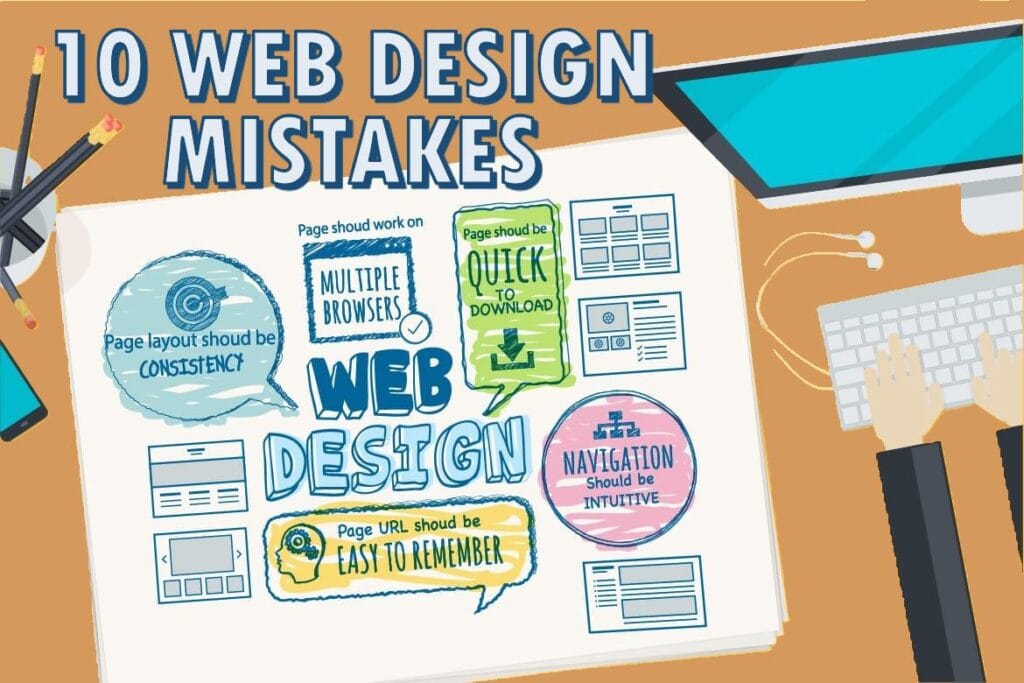
In the Swiss market specifically, these trust signals carry extra weight. Swiss consumers are discerning. They’re comparing you, consciously or not, to the precision and quality they associate with Swiss brands generally. A website that looks like it was built five years ago by a distant relative is signalling the wrong thing — even if your actual service is excellent. The fix isn’t always a full redesign; sometimes it’s updating photography, adding a couple of recent client testimonials, and cleaning up the layout. Our roundup of the most common web design mistakes Swiss businesses make covers this in detail.
7. Analytics from day one — not as an afterthought
Google Analytics 4 is free. Google Search Console is free. Together, they tell you which pages people actually visit, how long they stay, where they drop off, which search terms brought them to your site, and which devices they’re using. This data is how you improve over time — and it’s how you justify future investments in your website.
A website without analytics is a black box. You’re spending money without knowing what’s working. A website with analytics from day one gives you a growing dataset that gets more valuable every month. The day your website launches should also be the day you set up your analytics, connect Search Console, and establish baseline metrics to measure against. It takes under an hour to set up properly and is one of the clearest markers of whether an agency takes results seriously.
What does a properly built SME website actually return?
The numbers are more compelling than most business owners realise. Data from SME web projects in Switzerland and comparable markets point to consistent patterns:
The clearest example from our own portfolio: a local Zurich cat-sitting service came to us with a slow, non-mobile site that ranked nowhere in local search. We rebuilt it on WordPress with Swiss hosting, optimised for local keywords, and set up her Google Business Profile properly. Three months later: top-3 Google ranking for her main keywords, 200% increase in search visibility, 70% more booking enquiries. She now runs a waiting list during holidays. The investment paid back in under four months.
Choosing your path: a direct comparison of website options for Swiss SMEs
Before committing to any approach, it helps to see the tradeoffs clearly. Here’s what each option actually delivers — not the marketing pitch, but the honest picture.
| Criterion | DIY Builder (Wix, Squarespace) | Freelancer (template-based) | SME Agency Package (Clear Design Experts etc.) | Full-Service Agency (large studios) |
|---|---|---|---|---|
| One-off cost | CHF 0 | CHF 600–1,500 | CHF 799–2,500 | CHF 5,000–50,000+ |
| Annual running cost | CHF 180–480 | CHF 80–200 | CHF 60–120 | CHF 300–2,400 |
| You own the website | ✗ No | ✓ Yes | ✓ Yes | ✓ Yes |
| Swiss server hosting | ✗ Rarely | ◐ Optional | ✓ Standard | ✓ Yes |
| Mobile-first build | ◐ Depends | ◐ Variable | ✓ Always | ✓ Always |
| Local SEO setup | ✗ None | ✗ Rarely included | ✓ Included | ✓ Extended |
| Strategy session | ✗ None | ✗ Rarely | ✓ Standard | ✓ Detailed |
| Self-manageable CMS | ✓ Easy | ◐ Varies | ✓ With training | ◐ Often agency-dependent |
| Google Analytics setup | ✗ DIY | ✗ Rarely included | ✓ Included | ✓ Extended |
| Swiss DPA / GDPR compliance | ✗ Your responsibility | ✗ Usually excluded | ✓ Standard | ✓ Full |
| Best suited for | Hobby projects, personal pages | Tech-savvy solo operators | Most Swiss SMEs | Large businesses, complex platforms |
One thing the table can’t capture is the hidden cost of Swiss DPA compliance — Switzerland’s Federal Act on Data Protection, which aligns closely with GDPR. A website that collects contact form data, runs Google Analytics, or uses cookies needs proper consent management and a privacy policy. Getting this wrong creates legal exposure. A good SME agency includes this as standard; most DIY builders and budget freelancers leave it entirely to you.
If you’re still weighing up your options and want a framework for evaluating agencies specifically, our guide on how to choose a web design agency in Switzerland walks through the exact questions worth asking before you sign anything. And for a detailed breakdown of what different scope levels actually cost, the website development costs guide for Switzerland has the most current pricing data we’ve published.
Common questions about affordable web design in Switzerland
Prices vary widely. A market analysis covering 36 Swiss web agencies found hourly rates ranging from CHF 120 to CHF 250. For a complete 5–8 page business website with design, mobile optimisation, basic SEO, and launch support, SME-focused agencies typically charge CHF 799 to CHF 2,500. Mid-size agencies start around CHF 3,500, and full-service studios can reach CHF 50,000 or more for complex projects. Ongoing costs — hosting, domain — add roughly CHF 5–15 per month.
For a simple personal page or hobby project, possibly. For a business that wants to rank on Google, own its website, and grow over time — it’s the wrong tool. Website builders host your site on their infrastructure, meaning you don’t truly own it. If the platform changes pricing or shuts down, you’re rebuilding from scratch. SEO capabilities are also meaningfully limited compared to WordPress, particularly for local search in Switzerland. The annual fee looks small, but the long-term cost of poor rankings and platform dependency adds up quickly.
For a focused SME package (5–8 pages, professional design, local SEO setup), plan for two to four weeks from first meeting to launch. The biggest variable is usually content: the faster you provide your text, images, and business details, the faster the project moves. Clients who arrive with organised materials often go live in under two weeks. Freelancers working from templates can sometimes deliver in days, though the quality of the strategy and output varies significantly.
Yes — for most Swiss businesses, a .ch domain is strongly recommended. It signals Swiss origin immediately and carries trust associations with local visitors. Google also uses country-code top-level domains (like .ch) as a local relevance signal, which helps with Swiss search rankings. Domain cost is typically CHF 12–20 per year. A .com is cheaper but less optimal for a business primarily serving Swiss customers. The few francs’ difference per year is negligible compared to the local SEO and trust benefits.
Yes, and you should be able to. Any professionally built WordPress site makes it straightforward to update text, images, prices, and opening hours without technical knowledge. At Clear Design Experts, every client receives a personalised video walkthrough specific to their site after launch — not a generic tutorial — so you feel fully confident managing your own content. The goal is independence, not dependency on the agency for every small change.
The difference is process, not just price. A cheap website skips strategy, skips mobile testing, skips SEO setup, and often skips Swiss DPA compliance. An affordable professional website — from a focused SME agency — includes all of these as standard because they’re what makes the website actually perform. The distinction becomes clear about six months after launch: one website is generating leads; the other is collecting digital dust. Ask any agency you’re evaluating to show you their process, not just their portfolio.
The bottom line on affordable web design for Swiss SMEs
Affordable web design in Switzerland is entirely achievable — but only if “affordable” is defined correctly. It means efficient, focused, and built around what your business actually needs. It doesn’t mean skipping mobile optimisation, ignoring local SEO, or using a platform you don’t control.
The Swiss market rewards trust. Your competitors in Zurich, Geneva, and Basel are investing in professional online presences. The businesses winning in 2026 aren’t the ones with the biggest budgets — they’re the ones that made smarter decisions earlier about where those budgets went. If your budget is genuinely at zero right now, start with what free web design actually gets you, and what it does not.
For SMEs ready to take a concrete next step, the 7-step SME web design guide for Zurich covers the full decision process from brief to launch. Or, if you’d prefer to simply find out what a website tailored to your business would cost, you can request a free, no-obligation quote from Clear Design Experts. No template answers — just a clear, specific price for your actual project.